

NED — the design system three product lines now build on
Led a team of 3. Audit to rollout in three quarters.
problem
My Team
My role
Years of fragmented design systems were costing RetailMeNot real velocity, duplicated design work, inconsistent products, and a handoff process that made engineering slower than it needed to be.
Janell McCanna - Sr. Product Designer
Product design, research, product strategy, stakeholder alignment, information architecture, visual design, copywriting, quality assurance.
Chon Shoaff - Art Director + Designer
Product design, research, product strategy, visual design, copywriting.
Michelle Young - Sr. Product Designer
Research, product design.
Product Design Manager
Facilitator and contributor, responsible for strategy and execution.
overview
RetailMeNot's product and marketing teams were working from three incomplete, competing design systems — none of which could serve as a single source of truth. As Product Design Manager, I campaigned for the roadmap time to fix it, then led a three-person team through a company-wide audit, a build-vs-buy evaluation, and a three-phase rollout.
The result was NED — a fully tokenized global design system named for "No Expiration Date," a term of art in the deals space. NED unified product and marketing under one shared toolset, cut friction in developer handoff, and shipped its first real test with RetailMeNot's browser extension redesign.
Role: Design lead and team manager, owned the strategic narrative, and the design concepts that made the future state tangible.
Partners: Head of Engineering, VP of Marketing (business framing and scoping) and a 3 Senior Product Designers (concept and craft).
Audience: Executive leadership across Marketing, Sales, Engineering and Content.
Outcome: Build times cut by 2/3 across all product lines. System adoption across 4 teams. Multi-quarter roadmap that resulted in a global design system.
background
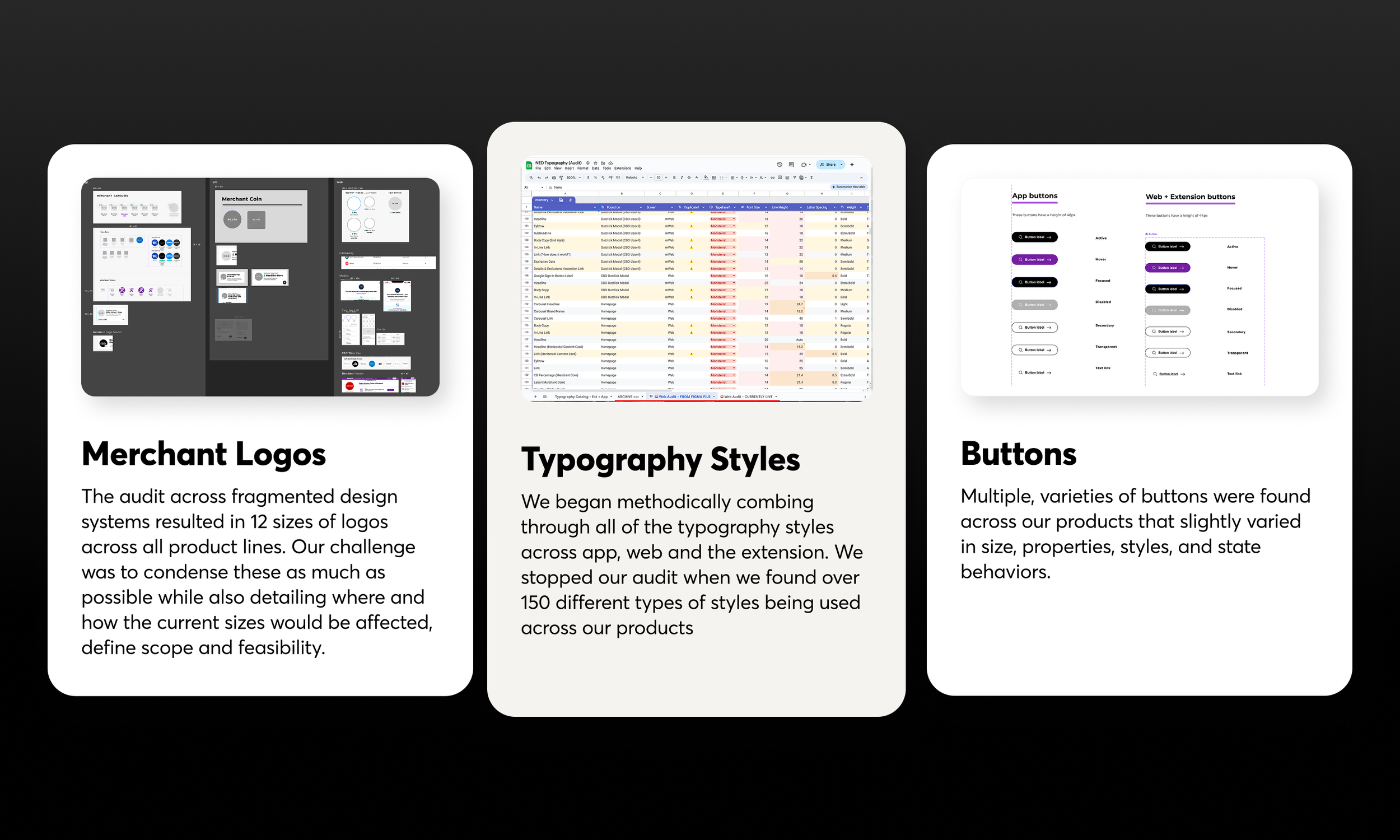
RetailMeNot designers had spent years working inefficiently. Componentry was duplicated across teams, typography styles had multiplied, and every breakpoint meant designing the same screen again from scratch.
Time on a product team is always the constraint, so before any design work could begin I spent considerable time campaigning with executive leadership — making the case that a well-built design system wasn't a nice-to-have but infrastructure that product and engineering both depended on. Communicating that value clearly is what eventually earned us the roadmap space.
Once approved, Chon and I began auditing what already existed. We found three design systems in various states of completion, none finished enough to scale into the holistic solution we needed across product and marketing. That kicked off a company-wide component and systems audit.
I assigned Janell the task of auditing the gathered componentry for viability and scalability. Her findings were decisive: years of work by rotating designers had introduced enough human error and inconsistency that salvaging the existing systems would cost more than it saved.
The path forward was clear.
We needed to start fresh.
approach
With three designers and a full roadmap still to support, the question wasn't just what to build — it was how to build it economically.
Evaluating the foundation
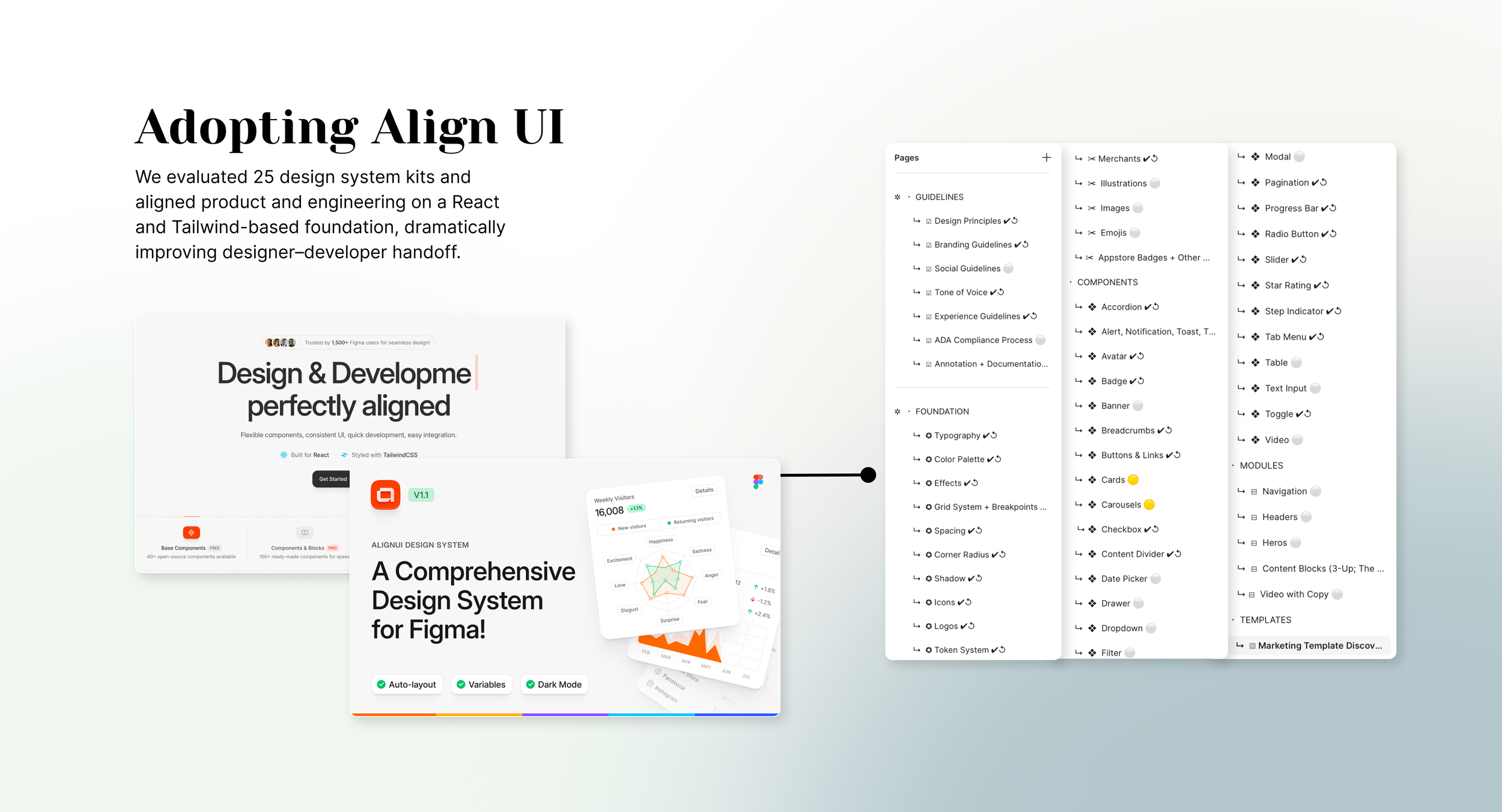
Janell spearheaded research into existing design system kits, surfacing 25 viable options across a range of price points and feature sets, alongside case studies of design system successes elsewhere. Design and engineering evaluated them together and unanimously selected Align UI — built for React and styled with Tailwind, both of which mapped directly onto our stack and promised a materially smoother design-to-engineering handoff.
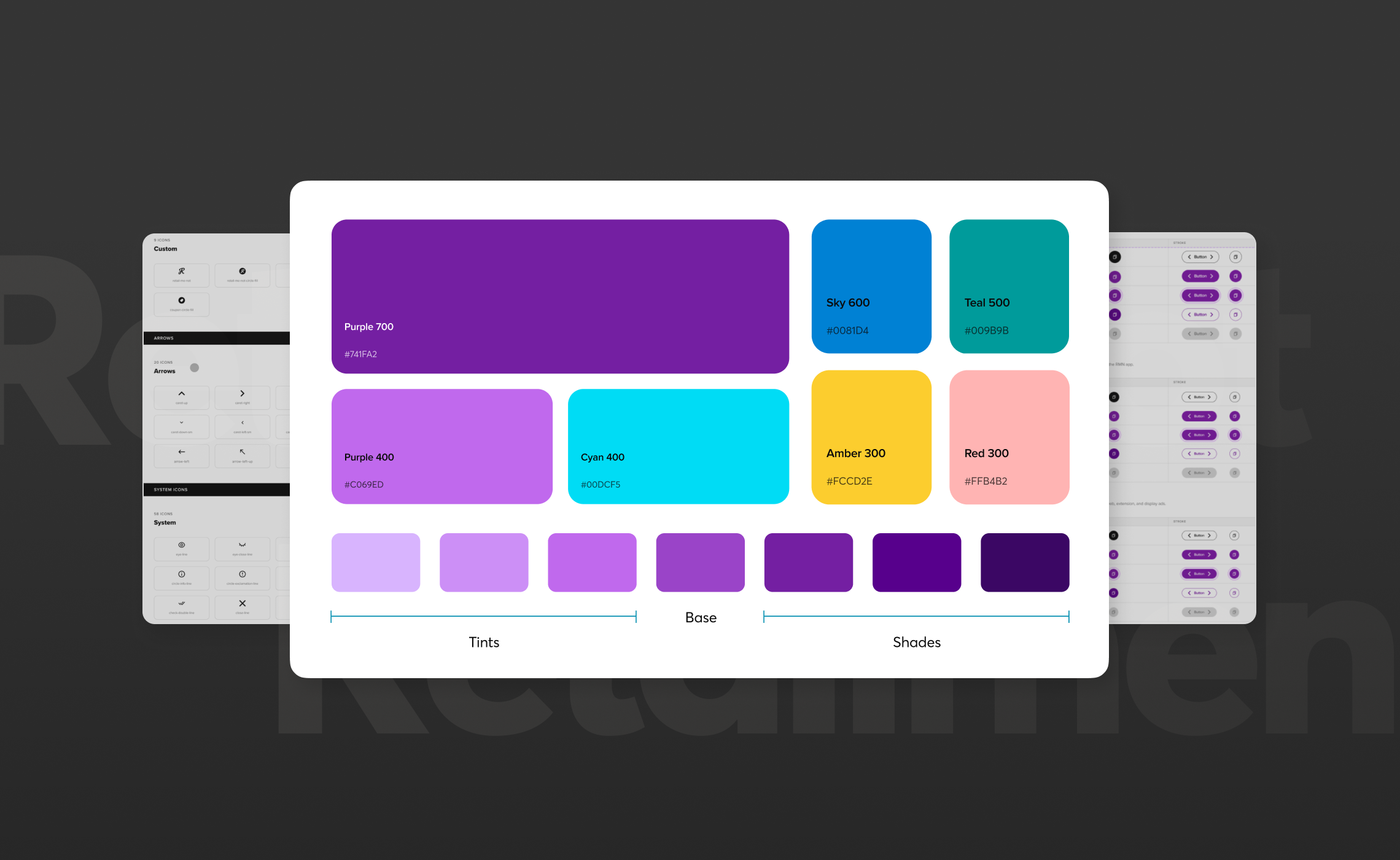
After purchasing Align UI, we combed through it against our existing products to conduct a side-by-side comparison of the foundational elements we'd need to build ourselves.
a three phased plan
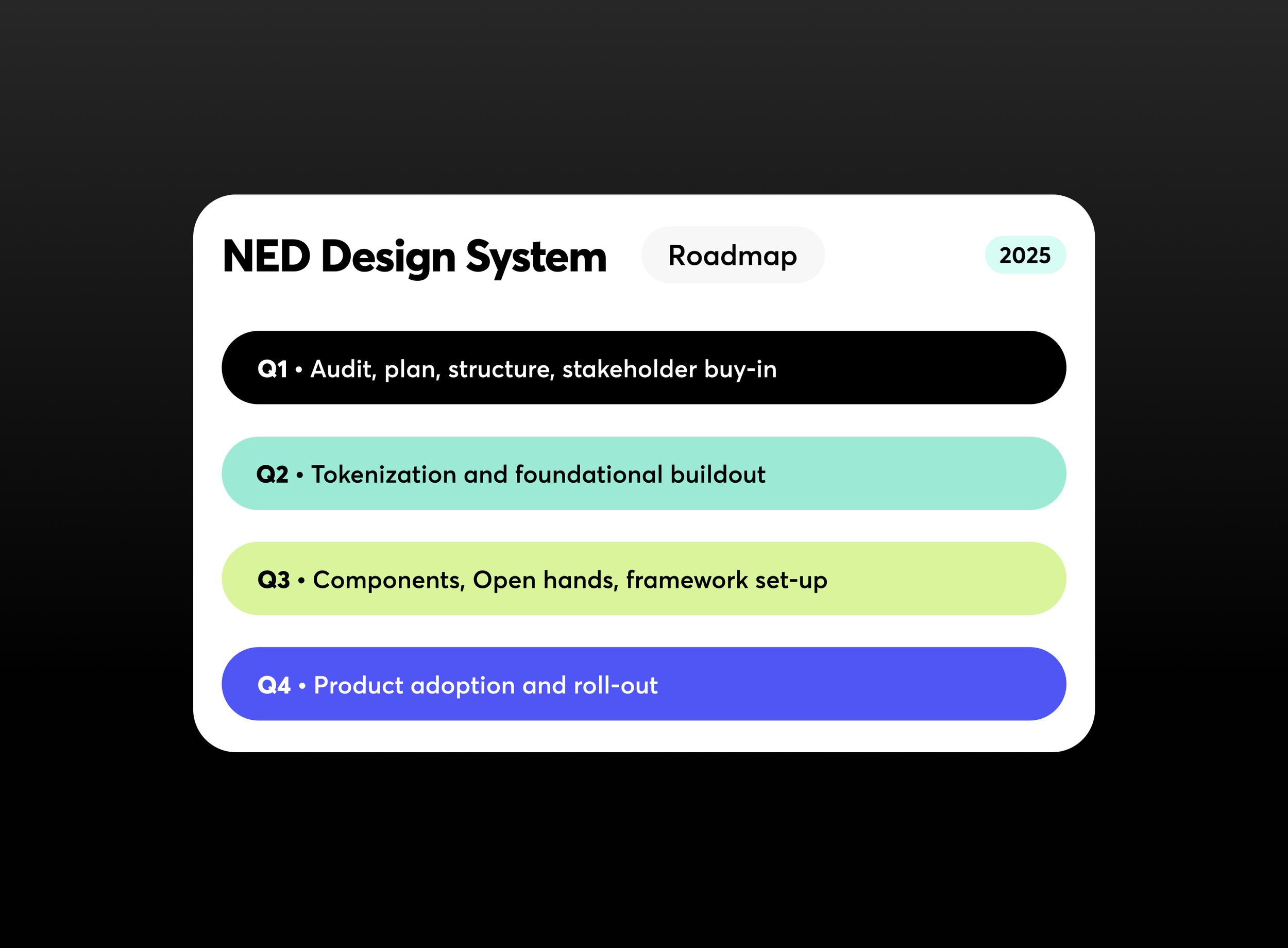
I presented a three-phase approach that became our project timeline.
Ideation, testing, and product implementation.
In three quarters we'd be ready for full adoption, Storybook ingestion, and implementation.
Leadership and partner teams signed on.
Q2 / Phase 1
Communication and education
Cross-business-unit transparency was going to determine whether this worked. The more our partners understood what the system unlocked, the more it would reshape how the product team operated day to day. Designing within fully-responsive grids alone meant designing once instead of repeatedly for every breakpoint.
The benefits we communicated:
Consistency across product lines that had drifted apart
Reduced friction in developer handoff
Consolidated, pared-down componentry and typography styles
A shared toolset unifying marketing and product under one source of truth
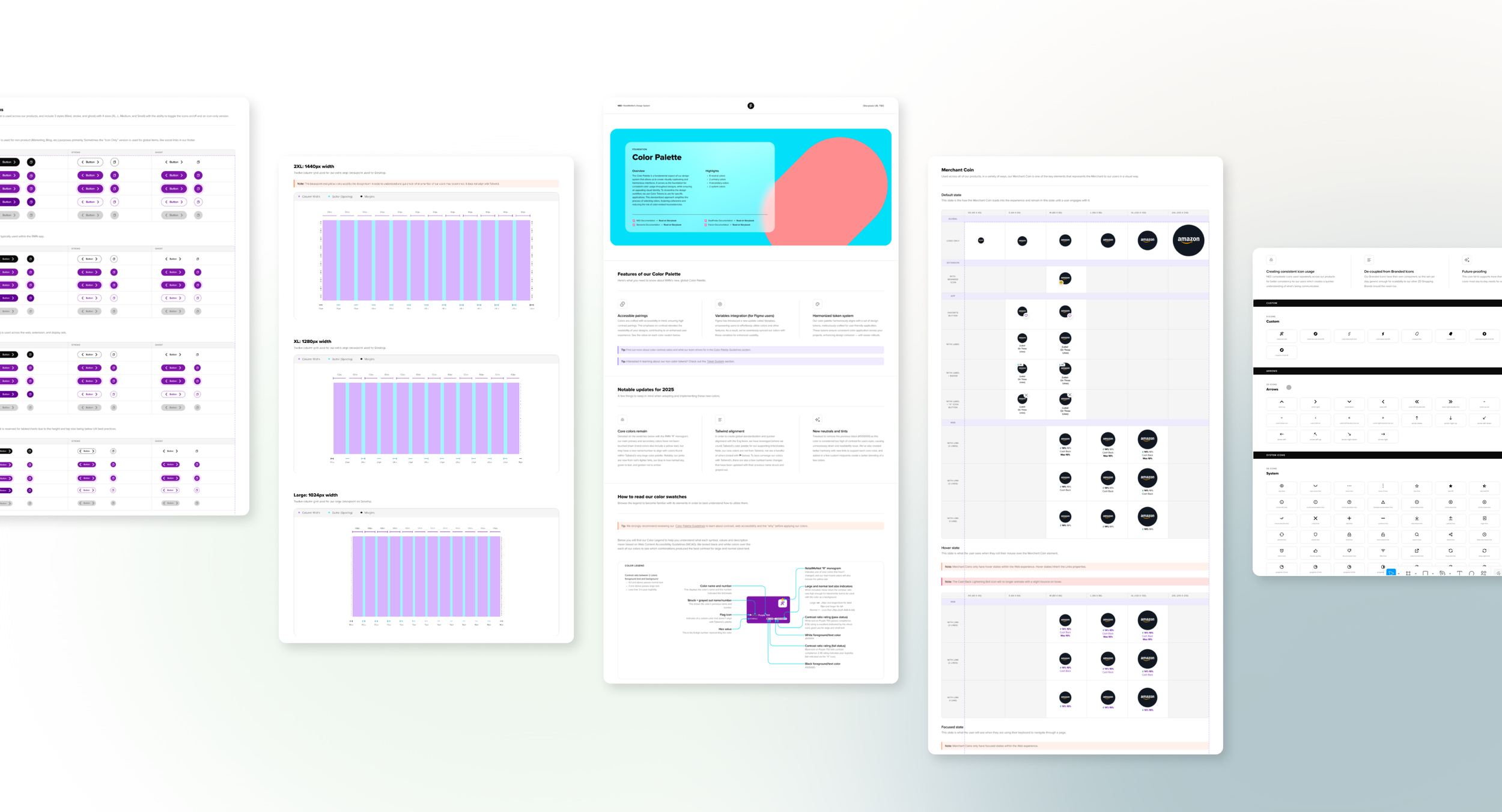
Thorough documentation of product and brand standards, made AI-accessible through Storybook
Phase 2 / Consolidating guidelines
Janell and I worked with the social, brand, and marketing teams to fold each department's guidelines into the system, so every standard lived in one place.
In parallel, we structured the design system file itself for long-term use:
Documentation layouts, per-component requirement outlines, and the research needed to stand up Storybook as living documentation
Q3 / Phase 3 Build
My role shifted here from director to collaborator, facilitator, and reviewer as Janell took the reins on skinning the foundational components. We ran rigorous design working sessions, follow-up audits, and reviews.
Throughout, we kept communication deliberate:
NED updates went out through company all-hands announcements, weekly leadership updates, and a bi-weekly cross-departmental session we called "NED-Talks," where we shared progress and worked through how the system would change each team's day-to-day.
outcomes
*
outcomes *
NED is already proving itself.
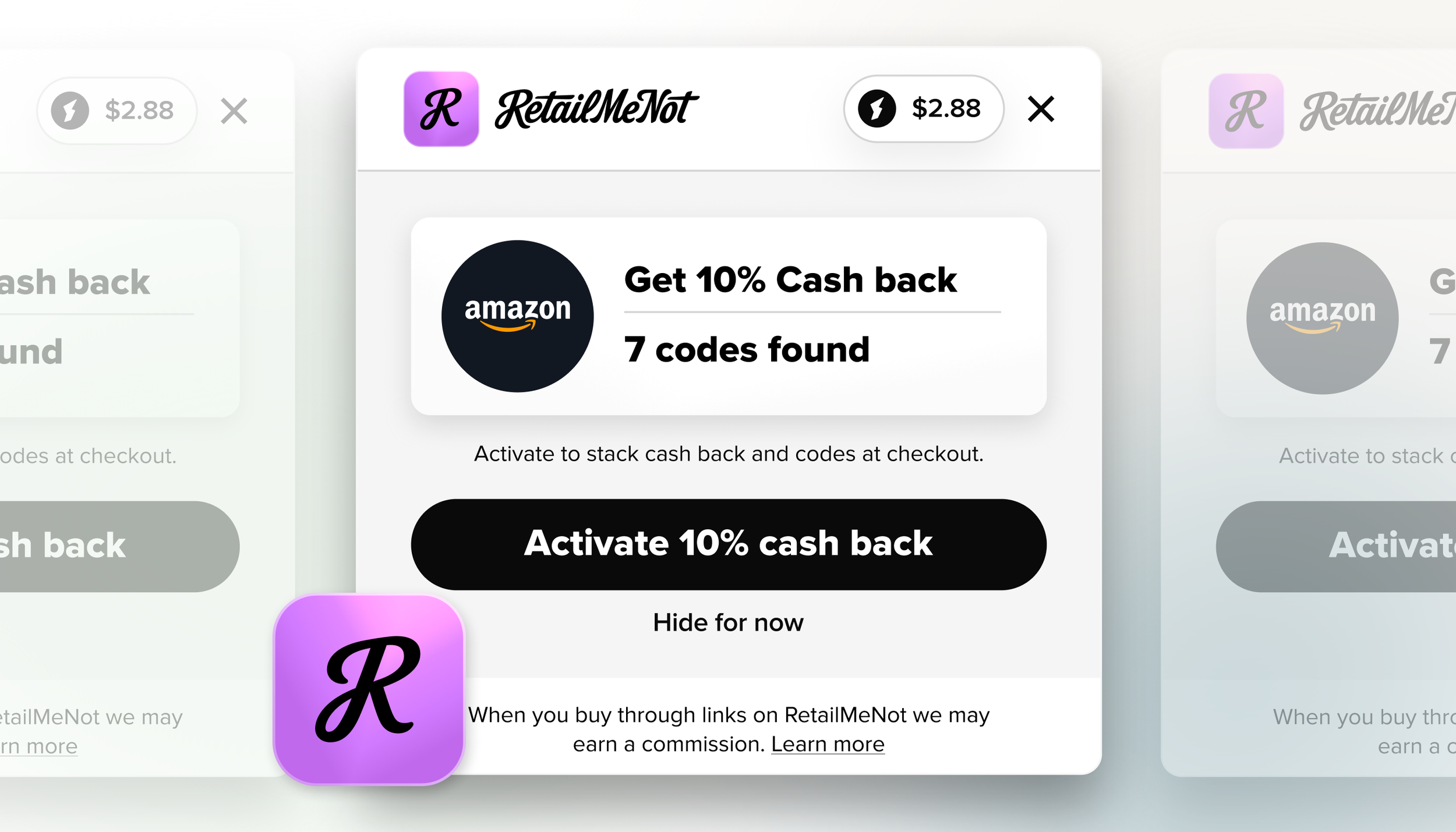
We used it to build RetailMeNot's latest browser extension redesign, and the difference showed up immediately:
Faster build times on a real, shipped product
Faster iteration and prototyping, with responsive behavior handled by the grid rather than by hand
Less guesswork in developer handoff, thanks to a React and Tailwind foundation shared by both disciplines
Cross-functional adoption, with marketing, brand, and social operating from the same toolset as product for the first time.
Reflection
The hardest part of this project wasn't the design work, it was the year of advocacy that preceded it.
Design systems are infrastructure, and infrastructure is always easy to defer in favor of the next feature. Learning to make that case in terms leadership cared about — engineering velocity, handoff cost, roadmap capacity — is what actually unlocked the work.
The second lesson was knowing when to stop salvaging.
Three partial systems represented real effort from people I worked with, and there's an instinct to honor that by building on top of it. Janell's audit gave us the evidence to make an unsentimental call, and starting fresh was ultimately faster than reconciling three sets of accumulated inconsistencies.
Finally, NED-Talks turned out to be as important as any component we built.
A design system that people don't understand or trust is just another file nobody opens. Treating adoption as its own design problem — with its own communication cadence, its own audience research, its own feedback loop — is what turned NED from a deliverable into something teams actually reached for.